

Liquor Licenses for Sale, Explained and Brokered in One Place
Prices and fees for liquor licenses
Everything You Need to Buy, Sell or Start
Liquor Licenses for Sale
Sell Your Liquor License
State-by-State Liquor License Guides
Not Sure Which License You Need?
What we provide
Liquor License Marketplace
Liquor License Brokers
Liquor License Financing
Liquor License Costs
Typical Transfer Time
Liquor License Rules
Types of Liquor Licenses
How to Get a Liquor License
Buyers
Sellers
Brokers and Attorneys
Business Owners and Startups
Guides
Liquor license basics
A liquor license is permission from a state (and often a city or county too) to sell or serve alcoholic beverages at a specific place. It is tied to a business, a person or entity that has passed a background review, and a set of premises. That is why buying a license is never just a payment. The state has to approve the new owner, and usually the new location as well.
Liquor License per State
Every state writes its own alcohol laws, so the names change. California uses numbered “types” (Type 47, Type 21). Arizona uses “series” (Series 6, Series 12). Ohio calls them “permits” (D-5, C-2). Michigan uses classes like Class C and SDD.
Is it limited by a quota?
This is the question that decides whether you pay a few hundred dollars or tens of thousands. Many states cap how many full liquor licenses can exist based on population
How the three-tier system fits in
After Prohibition ended in 1933, most states adopted a “three-tier” system that separates producers (breweries, wineries, distilleries), distributors (wholesalers) and retailers (bars, restaurants, stores).
Starting From Scratch?
If you are opening your first bar, restaurant, brewery, caterer or store, start with the basics:

How to get a liquor license, step by step
Types of liquor licenses, on-premises vs off-premises, beer and wine vs full
Liquor license lookup, how to check whether a license is active and who holds it
Beer and wine licenses, often the fastest and cheapest way to start serving


Temporary and event licenses for festivals, fundraisers and one-day events
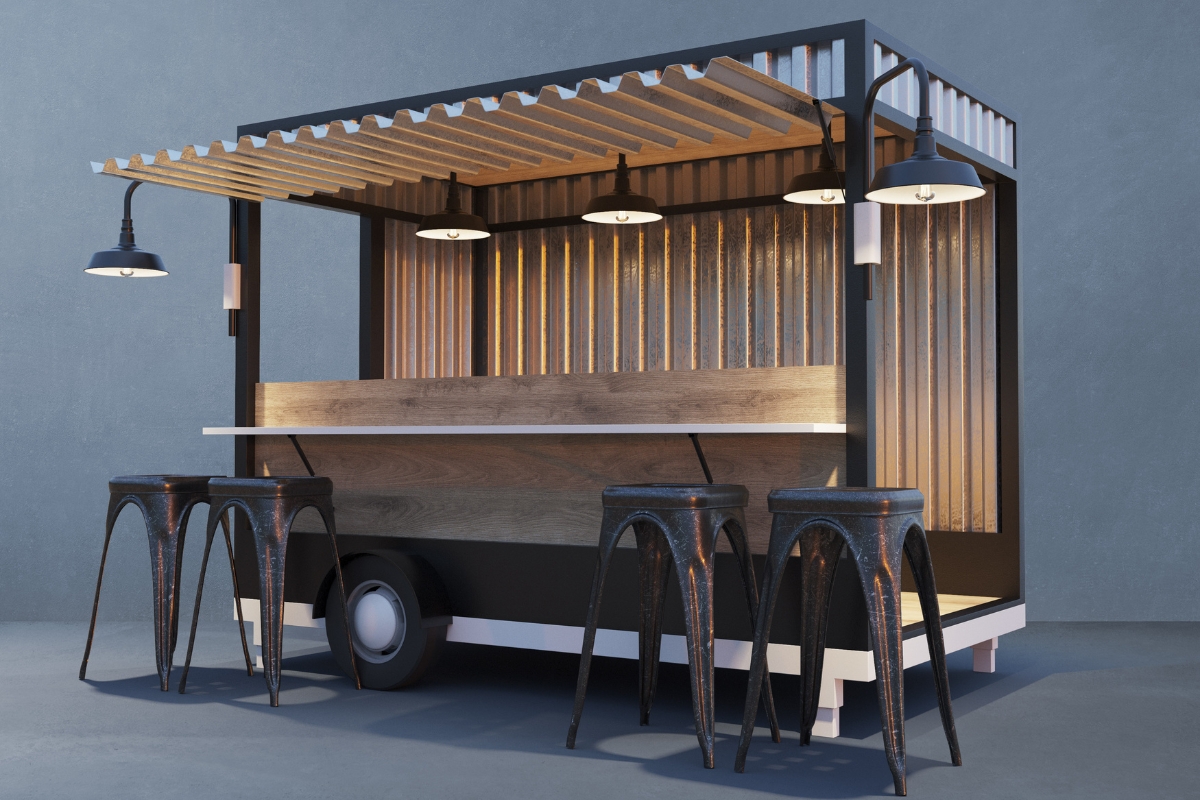
Mobile bar licenses for bartending services and food trucks
Buying or Selling a License? Let’s Talk
How a Liquor License Changes Hands
A license transfer has two sides running at the same time: the private deal between buyer and seller, and the public approval from the state and local authorities. The details vary by state, but the order of events is broadly the same.
Confirm the license fits your business.
Agree on price and terms
Open escrow.
File the transfer application
Public notice and local review.
Approval and closing.
How Much Is a Liquor License?
There is no single price. What you pay depends on two very different numbers, and people often confuse them.
The government fee
This is what the state (and sometimes the city or county) charges to issue, transfer or renew a license. For licenses that are not capped by quota, such as many beer and wine licenses, the government fee is most of what you pay. These fees are published and usually run from a few hundred dollars to a few thousand a year, depending on the state and license type.
For quota licenses, new ones are rare and the government can charge a lot for them. In California, a brand-new general license won through the ABC’s 2026 priority drawing carries a fee of $19,840, and an intercounty transfer costs $7,515.
The market price
When no new licenses are available, you buy one from a current holder at whatever the market will bear. This is where prices climb. Publicly listed asking prices for California licenses in September 2026 ran from a few thousand dollars for some beer and wine licenses to more than $400,000 for full licenses in high-demand counties. In Ohio, one law firm reports transfer prices for quota permits of roughly $15,000 to $40,000 or more depending on location.
What pushes a price up or down
- Quota pressure. The fewer licenses available relative to demand in a county or town, the higher the price.
- License type. A full on-premises or off-premises license is usually worth more than a beer and wine license.
- Portability. A license that can move anywhere in a large county is more useful than one locked to a small town.
- Location demand. Growing metro areas with new restaurants opening push prices up.
- Condition. Licenses with restrictive conditions, pending violations or long inactivity are worth less.
- Timing. A new drawing, auction or change in state law can shift prices quickly.
Other costs to budget for
Escrow fees, attorney or broker fees, background checks and fingerprinting, local permits and zoning approvals, liquor liability insurance, and in some states a surety bond. Our liquor license cost guide breaks these down by state.
Liquor Licenses by State
California Liquor Licenses
Licenses are issued by the California Department of Alcoholic Beverage Control (ABC) and are known by type number. The ones people search for most are Type 47 (full liquor for restaurants), Type 48 (full liquor for bars and nightclubs, no minors), Type 41 (beer and wine for restaurants), Type 21 (full liquor for stores) and Type 20 (beer and wine for stores) (ABC license types).
On-sale general licenses are capped at one per 2,000 residents of a county. When a county is at its limit, buyers purchase existing licenses, and the ABC releases a small number of new ones each year through a priority drawing. Sales that involve payment must go through escrow, the transfer has a 30-day public posting period, and the ABC estimates about 75 days for a person-to-person transfer.
Florida Liquor Licenses
Florida licenses are issued by the Division of Alcoholic Beverages and Tobacco within the Department of Business and Professional Regulation (DBPR). Licenses that allow beer, wine and spirits are limited to one per 7,500 residents of each county. These are called quota licenses, and the on-premises version is widely known as a 4COP.
When a county’s population grows enough to support new quota licenses, DBPR holds a drawing. For 2026 it announced 63 licenses across 30 counties, with entries accepted until 5 p.m. EDT on September 30, 2026. Winning gives you the right to apply, not an issued license (DBPR). Everyone else buys an existing quota license on the open market. Large restaurants that meet the state’s size, seating and food-sales rules (at least 51 percent of food and beverage revenue from food and non-alcoholic drinks) can get a special restaurant license outside the quota, but it stays with that premises and cannot be used as a package store.
New Jersey Liquor Licenses
New Jersey is unusual because retail licenses are issued by the municipality, under rules set by the state Division of Alcoholic Beverage Control. A town may not issue a new plenary retail consumption license (bars and restaurants) unless it has fewer than one for every 3,000 residents. Plenary retail distribution licenses (liquor stores) are capped more tightly, at one per 7,500 residents. Many towns have been at or over their limits for decades, which is why New Jersey licenses can sell for high prices.
Transfers to a new owner or a new location need approval from the town’s governing body. Licenses run from July 1 to June 30 and must be renewed every year, even when inactive. An inactive or “pocket” license can only be renewed twice after it becomes inactive before the holder needs special relief from the state ABC Director.
Pennsylvania Liquor Licenses
The Pennsylvania Liquor Control Board (PLCB) generally allows one retail license for every 3,000 residents of a county. Restaurants, bars, taverns, beer-only eating places and clubs count toward the quota, while hotels, airports, golf courses, performing arts venues and some others are exempt (PLCB).
As a general rule, licenses cannot be transferred from one county to another, and a move within the county may also need municipal approval. Since Act 39 of 2016, the PLCB has also auctioned expired restaurant licenses several times a year, which added some supply for the first time in decades. Most buyers still purchase an existing restaurant (“R”) license from a current holder in the same county.
Arizona Liquor Licenses
Arizona’s Department of Liquor Licenses and Control (DLLC) issues licenses by series number: Series 6 (bar), Series 7 (beer and wine bar), Series 9 (liquor store), Series 10 (beer and wine store) and Series 12 (restaurant). Under state law, bar, liquor store and beer and wine bar licenses can be transferred to another location, but only within the same county (A.R.S. 4-203).
Other series, including the Series 12 restaurant license, stay with the original holder and location.
New Series 6 and Series 9 licenses are limited and are released each year at a rate of one of each for every 10,000-person increase in a county’s population, and when more than one person applies, the winner is picked by random selection (A.R.S. 4-206.01). Outside the lottery, a new bar or liquor store owner buys an existing license, which is why Series 6 and Series 9 licenses have an active resale market.
New Mexico Liquor Licenses
The Alcoholic Beverage Control Division regulates licenses in New Mexico. State law limits dispenser and retailer licenses to one for each 2,000 residents in a municipality or unincorporated county area, while allowing existing holders to keep renewing even where the total now exceeds the limit.
A 2021 law created new restaurant licenses (Restaurant A for beer and wine, Restaurant B adding spirits) that let restaurants serve full liquor without buying a dispenser license, as long as food is the main source of revenue and there is no dedicated bar. To offset the effect on existing owners, holders of dispenser licenses as of June 30, 2021 received tax deductions of up to $50,000. Dispenser licenses are still needed for bars and package sales, and they continue to change hands privately.
Ohio Liquor Permits
Ohio’s Division of Liquor Control, part of the Department of Commerce, issues “permits” rather than licenses. Common ones are C-1 and C-2 (carryout), D-1 (beer), D-2 (wine and mixed drinks), D-3 (spirits), D-5 (beer, wine and spirits for restaurants and nightclubs) and D-6 (Sunday sales). Each city or township gets one C-1, C-2, D-1 and D-2 permit per 1,000 residents and one D-3, D-4 and D-5 permit per 2,000 residents.
When the quota is full, a business can join a waiting list, look at quota-exempt permits such as those for community entertainment districts, or buy and transfer an existing permit. Ohio also has local option elections, so whether alcohol can be sold at all can depend on how a precinct has voted.
Michigan Liquor Licenses
The Michigan Liquor Control Commission (MLCC) caps on-premises (Class C) licenses at one for every 1,500 residents of a local unit of government. Take-out licenses are split into SDM (beer and wine) and SDD (spirits). When a license is not in use, it is often held in escrow with the MLCC, and businesses can buy these escrowed licenses from their holders. Licenses are generally transferable within the county where they were first issued, and local approval, including a public hearing, is part of the process.
If no quota license is available, some businesses qualify for resort licenses or development district licenses instead.
Indiana Alcohol Permits
Indiana’s Alcohol and Tobacco Commission (ATC) issues permits, and restaurants that want beer, wine and liquor need what is commonly called a three-way permit. These are limited by the population of the city or town. Once the local quota is met, a new restaurant has to buy a permit from an existing holder or win one when the state makes new ones available. Applications go through a hearing before the local alcoholic beverage board, which makes a recommendation, and the ATC makes the final decision.
Indiana law also allows certain permits outside the quota for restaurants in specific areas, such as some economic development areas, redevelopment districts and historic districts.
Every Other State
In many states, including Texas, most full liquor licenses are not capped by a statewide population quota. You apply to the state agency, pay the fee and meet the requirements, so there is nothing to buy on a private market. Local rules can still limit where licenses go, and some states cap licenses town by town. Our state guides explain the process, the regulator and the costs for every state, starting with Texas, New York, Illinois, Oklahoma and Washington.
Liquor License FAQs
It depends on the state, the license type and whether the license is capped by quota. Licenses the state still issues directly can cost a few hundred to a few thousand dollars in fees. In quota states, full liquor licenses are bought from current holders, and prices can reach tens or hundreds of thousands of dollars in high-demand areas. See liquor license costs by state.
Usually a few months. As one example, the California ABC estimates about 75 days for a person-to-person transfer and about 90 days for an original license. Protests, local hearings and incomplete paperwork can add time.
In quota states, yes. That is often the only way to get a full license. The sale is a private agreement, but the state (and sometimes the town) has to approve you as the new holder before the license is yours.
Often not. Arizona only allows transferable licenses to move within the same county, Pennsylvania generally does not allow transfers between counties, and Michigan licenses are generally transferable within the county where they were issued. California allows some intercounty transfers for an extra state fee. Always check the rules for the specific license before you buy.
A license whose total number is capped by law, usually based on population. When an area hits its cap, no new licenses of that kind are issued, which creates a resale market.
A beer and wine license lets you sell only beer and wine. A full (or general) license adds distilled spirits. Beer and wine licenses are usually cheaper and, in many states, not limited by quota.
Yes. Selling any alcoholic beverage to the public, including beer, requires a license from your state, and often local approval as well. Beer and wine licenses are usually easier to get than full liquor licenses.
Not for bars, restaurants or stores. Retail licenses come from the state. Businesses that produce, import or wholesale alcohol need federal permits from the Alcohol and Tobacco Tax and Trade Bureau (TTB) in addition to state licenses.
Most state agencies have an online search where you can check a license’s status, type and holder by name, address or license number. Our liquor license lookup guide links to each state’s tool.
In most quota states, yes, as long as the license is active and in good standing and the buyer is approved by the state. Keep it renewed while you look for a buyer. Sell your license.